By Michelle Rawlins
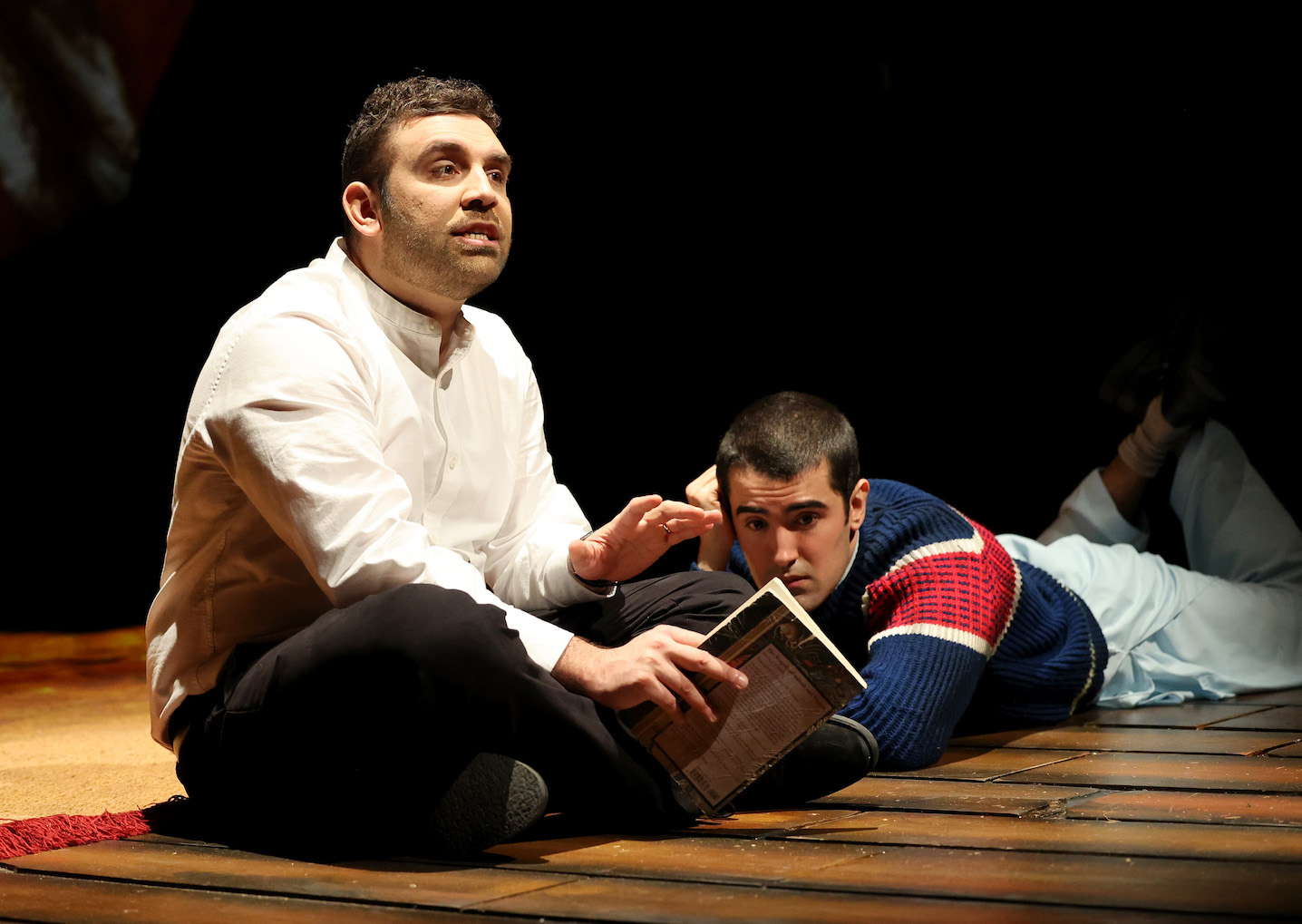
Based on Khaled Hosseini’s international best-selling novel, The Kite Runner is a haunting tale of friendship, redemption and atonement, which spans across decades, cultures and continents.
Beginning in Afghanistan in the 1970’s, we follow one man as he navigates life against a backdrop of war, ethnicity and religion.
The story follows under-confident Amir, who comes from a wealthy Pashtun family, and his friendship with Hassan, his servant, from a discriminated, minority Islam sect, the Hazaras.
Just like in the book, and the movie which followed in 2007, this carefully adapted production, by Matthew Spangler, does not shy away from the harsh realities of the history of a country divided by war. Subjects including genocide, sexual abuse and violence, are all ever-present. And although the themes are difficult, this sensitively executed piece of theatre is full of tenderness, love and warmth.

Amir is performed beautifully by Stuart Vincent who works tirelessly to capture the complexities of the character; a naive young boy desperate to win the respect and affection of his father, who doesn’t understand why he seems to bestow more attention upon Hassan. There are intricate nuances including feelings of fear when the local bullies make the friends’ lives hard. They cause Amir to make heart-wrenching decisions, irretrievably damaging their relationship, and leaving him with consequences he will have to live with for decades.
No longer are their carefree days filled with making dens, reading poetry and flying colourful kites across the city of Kabul. Hassan (Yazdan Qafouri) and his father leave Amir’s family home, permanently fracturing their once unbreakable bond. And not long after, the Soviet invasion begins, leading to the rise of the Taliban.
Amir and his father, Baba (Dean Rehman), escape the country, and with it their comfortable existence, and eventually become refugees in California.

But despite crossing continents, Amir cannot escape the harrowing memories of how he betrayed his childhood friend. What follows is a gripping quest of redemption, as he confronts his own demons and embarks on a journey of self-forgiveness.
You don’t need to have read the book, first published in 2003, to understand the myriad of hard-hitting, difficult themes covered in this play.
The script follows the story line closely. Previous runs of the show have been criticised for not showing the eventual warmth of Baba, the love that develops between father and son, or how Amir and Hassan’s earlier bully, Assef (Bhavin Bhatt) becomes a cruel disciple of war. But this adaptation, under the direction of Giles Croft, does both, with delicate integrity.
The set, designed by Barney George, is simple and sparse, but effective lighting allows for a city skyline, gardens, markets and a book-filled study.
The whole cast deserve praise for their outstanding and solid performances. Daphne Kouma plays Amir’s wife, Soraya, with compassion. Yazdan Qafouri perfectly depicts the bravery, doleful devotion and loyalty of Hassan and later as Sohrab.
Ultimately, this is a powerful piece of theatre, that exudes compassion, emotion and humanity.
Pictures by Barry Rivett for Hotshot Photography
Touring until July 6 2024
Tickets here