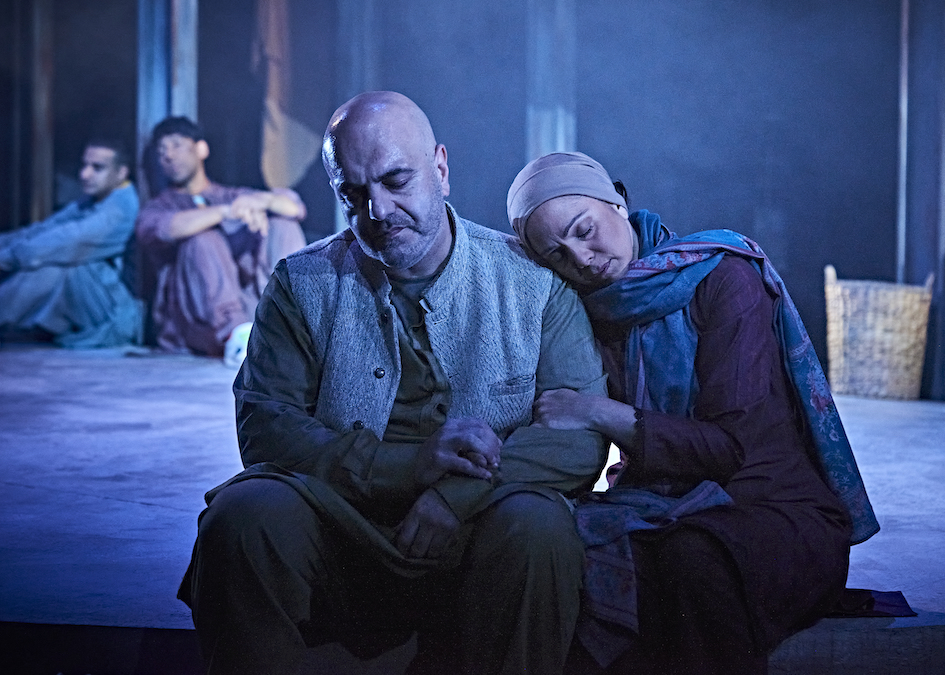
Sad and heartbreaking, this play made me cry.
Who wouldn’t feel moved, after all, at witnessing the agonising plight of refugees forced to leave behind the land they love and everything they own in it? Who couldn’t feel terror and anxiety at seeing young children fear for their lives and fight for breath as they’re bundled into car boots and claustrophobic, cramped containers to be transported to who knows where – with goodness knows what facing them at the end of it?
So yes, I cried. Streaming tears.
But don’t let that put you off from seeing the play.
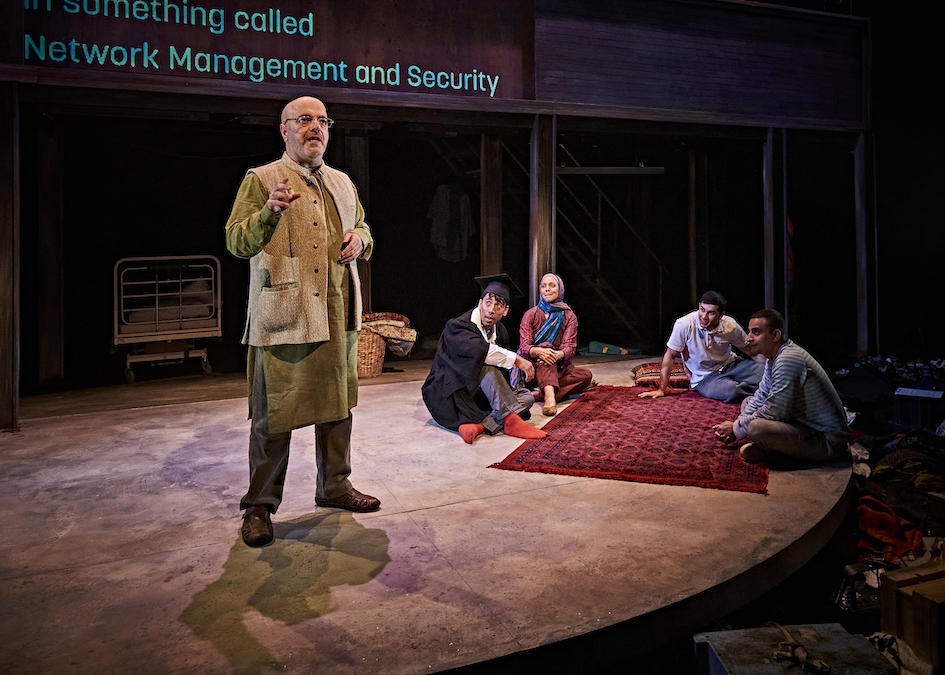
Because although I cried, I also laughed a lot. I felt a glow as I watched the warming portrayal of family love; the realistic bickering between brothers, their dreams of playing for Man U. I also felt uplifted by the message that hope – and help – is always out there.
One thing’s for sure, the story behind The Boy with Two Hearts is one that needs to be heard and to be seen.
A WMC production, the play is by Hamed and Hessam Amiri, adapted for the stage by Phil Porter and based on the book of the same name by Hamed Amiri, which incidentally was chosen as Radio 4’s Book of the Week
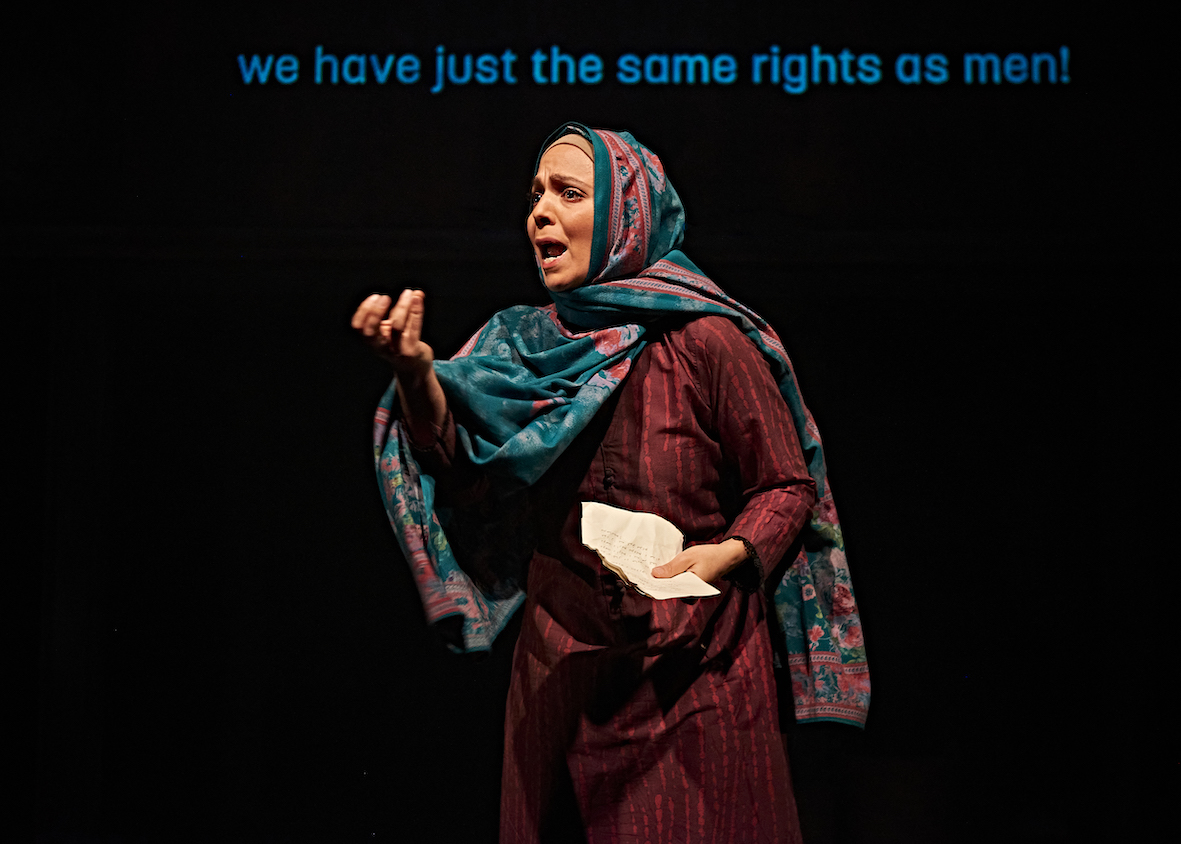
It tells the true story of the Amiri family – forced to flee their home in Herat, Afghanistan in 2000, when young mother Fariba (Gehane Strehler) makes an impassioned speech, demanding more freedom and rights for women. A warrant is issued for her execution by local Taliban leaders and the family’s nightmare begins as they have to leave all they’ve ever known behind.
Torn away from their warm home, where meals and jokes around the sofrah bond them together, Fariba, husband Mohammed (Dana Haqjoo) and their three sons, Hessam, (Shamail Ali), Hamed (Farshid Rokey) and Hussein (Ahmad Sakhi) begin a terrifying, arduous journey across Europe in a bid to get to the UK. As well as refuge, here they hope they will find medical help for eldest son Hussein’s heart condition
Not only is their journey filled with risk – where handlers wave around firearms and steal their money – it’s also something of a race against time as Hussein’s heart condition worsens. Will the family ever make it safely to a new home and the hope of a healthy future for Hussein?
Staging is really inventive and interesting – a strip of video plays creative captions – with words such as rain and snow falling down the screen to depict the weather, for example. And the dialogue is projected throughout. Scenes take place on the stage floor or balcony and there are small ‘boxes’ suspended between them portraying the small spaces the family of five have to cram themselves into to hide when they travel in the boot of a car, for example.
Haunting, melodic singer Elaha Soroor drifts on and off stage, creating a beautiful – sometimes melancholic, other times more upbeat – atmosphere. She is like an angel calling for Hussein to join her whenever he experiences a ‘turn’ brought on by his heart condition.
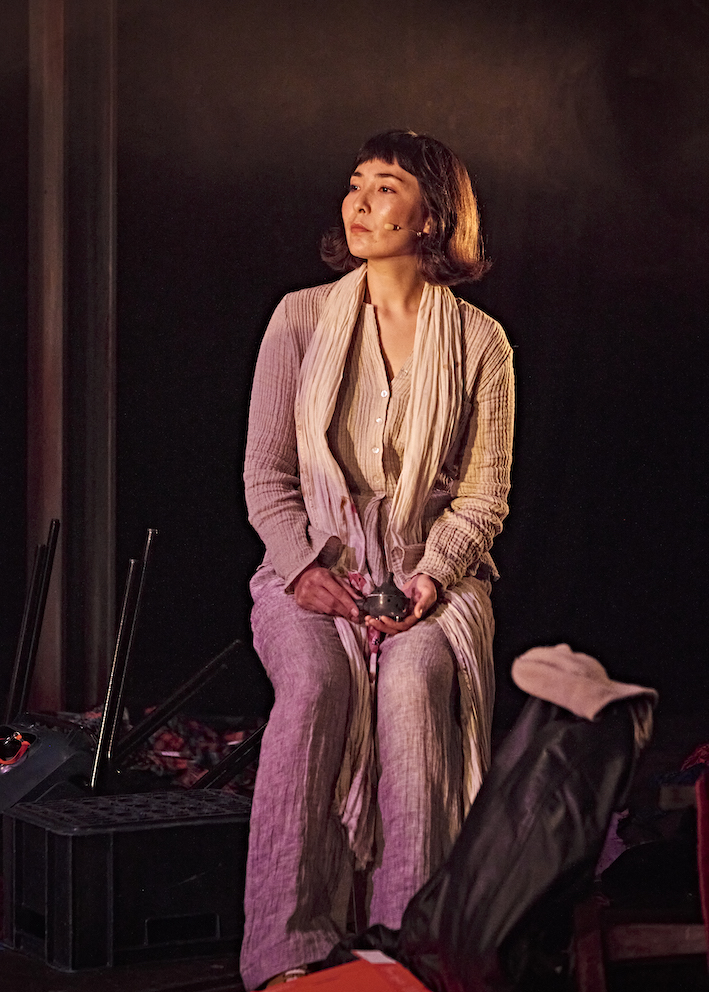
The cast of five take on different roles throughout the play, quietly exiting before reappearing as a new character – whether a family friend or a handler. It’s all done seamlessly – and the scene where they each play the same character one after another by simply removing, then wearing, the same jacket is choreographed excellently.
There are plenty of moments of suspense and fear, with clever lighting and a dramatic music score adding to the feeling of chaos. And one particular scene, where the family are being starved of air in a ship container, will have you on the edge of your seat.
The play ends with a message from the cast asking us to see the positives in the story and to take away with us the message of hope.
We took away that message and a whole lot more besides and we can’t help thinking this should be a play that could and should make it onto the school curriculum any time soon, too.
Don’t miss your chance to catch it at Wales Millennium Centre until 23 October. Tickets are £15 each.